
PROPOSED SERVICE 04
Drainage and Stormwater Works
Foundation performance and soil stability are inseparable from water management. We construct civil stormwater networks, perimeter cutoff drains and surface grading systems that capture runoff cleanly and prevent moisture extremes beneath slabs, pavements and retaining walls.
WHY THIS SCOPE MATTERS
Site challenge & practical use case
Ponding water against a slab edge causes reactive clay to swell unevenly, lifting corners or softening pavement subgrades. Well-graded surface swales, sealed stormwater lines and free-draining subsoil trenches keep ground moisture consistent throughout wet and dry seasons.
SCOPE DEFINITION
What is included—and clear service boundaries
Defining scope boundaries upfront prevents assumptions between civil, engineering and building trades.
- Trenching, bedding and laying of uPVC, reinforced concrete or poly stormwater pipelines
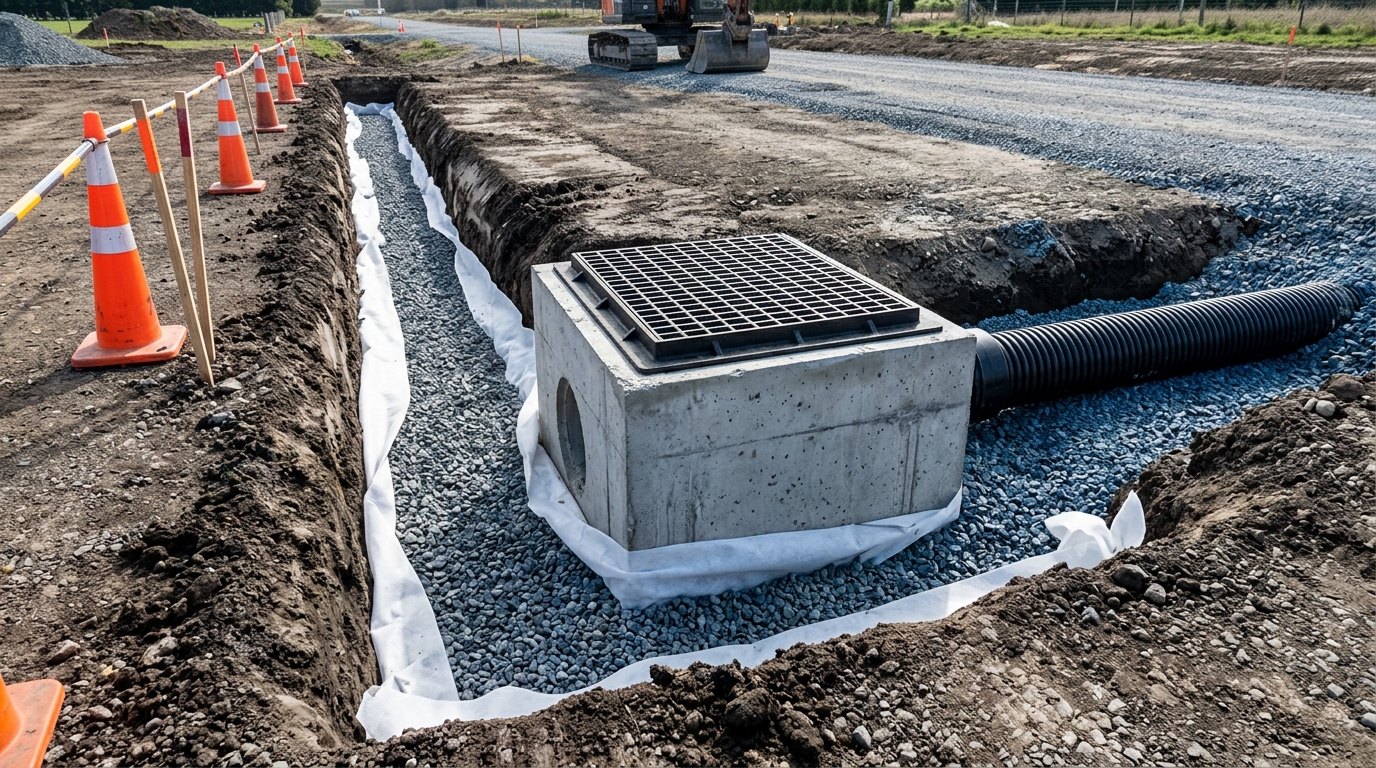
- Precast or cast-in-situ junction pits, grated trench drains and surface inlet pits
- Subsoil agricultural (agi) drains wrapped in geotextile fabric with clean aggregate backfill
- On-site stormwater detention (OSD) tank excavations, bases and civil chambers
- Surface swale formation and perimeter apron grading away from slab edges
- Flushing points, inspection risers and grade verification prior to backfill
- Hydraulic stormwater design, OSD sizing and legal point of discharge approvals are prepared by hydraulic/civil engineers and council
- Roof guttering, downpipes and internal sanitary plumbing are performed by licensed plumbers
- Works within council road reserves or easements require relevant authority permits prior to excavation
Final inclusions, exclusions, engineering hold points and licensing confirmations are documented in writing within each project quotation.
DELIVERY WORKFLOW
How drainage and stormwater works progresses
Each stage completes verification checks before moving to the next phase.
- 01
Discharge & Fall Verification
Confirm invert levels at the legal point of discharge before excavating upstream trenches.
- 02
Trenching & Bedding
Excavate to laser-checked gradients and place compacted granular pipe bedding.
- 03
Pipe, Pit & Geotextile Installation
Install pipes, pits and subsoil filtration layers with sealed joints on solid lines near footings.
- 04
Backfill & Surface Grading
Backfill in compacted layers and shape surface falls away from structural perimeters.
FREQUENTLY ASKED QUESTIONS
Questions about drainage and stormwater works
Have a project-specific question not covered here? Visit our general FAQs page or send us your drawings directly.
Engineering standards for reactive clay slabs assume normal site maintenance—meaning water does not pond against the footing or leak from unsealed pipes. Controlled drainage prevents localized clay heave.
Placement depth and offset must follow the structural or geotechnical engineer’s detail so trenching does not undermine the footing zone of influence or excessively dry one side of the slab.
It is the council-nominated connection point—such as a street kerb adaptor, council pit or inter-allotment easement—where site stormwater is permitted to discharge.
RELATED PACKAGES
Complementary site & concrete services
Civil Construction Works
Integrated site infrastructure, bulk groundworks, service corridors and civil packages coordinated to engineering drawings.
Retaining Wall Construction
Engineered reinforced concrete, concrete sleeper and block retaining structures with integrated footing and drainage systems.
Concrete Slabs and Foundations
Engineered stiffened raft slabs, waffle pod systems, strip footings and bored piers built for reactive and challenging ground.
Need civil stormwater or site drainage planned?
Send through your site suburb, engineering plans or project summary and we will review the scope with you.